

Japanese Language Course

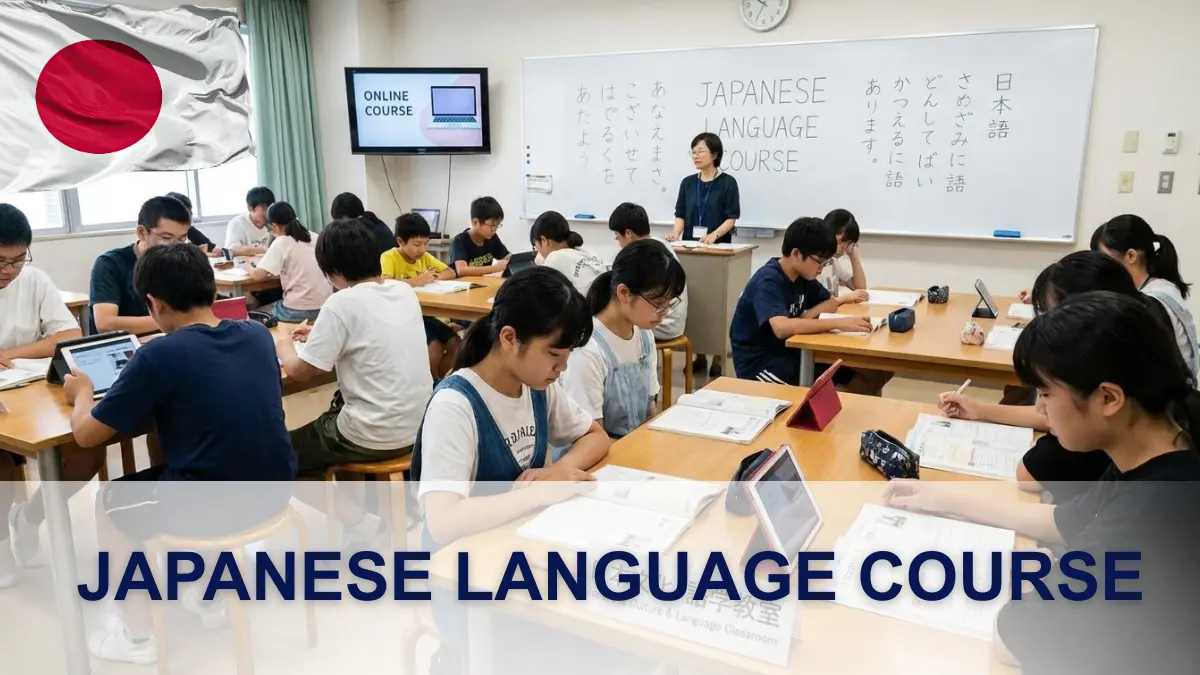
Japanese Language Course
Introduction
These days, almost everyone talks about going abroad for studies. It sounds simple when people say it, but in reality, it’s not that easy. Getting admission in a good university involves a lot of requirements, and language is one of those things that people often underestimate in the beginning.
Yes, English helps in many countries. But when it comes to Japan, things are a bit different. Daily life, interaction, and even many academic environments rely more on the local language than people expect.
That’s where the Japanese Language comes in. Students who already have some understanding of the Japanese Language usually feel less lost when they arrive. They don’t struggle with small everyday things, which actually matter more than we think.
Importance of Foreign/Second Language Learning
In a global world, communication should be easy, but it’s not always like that. Even though English is used widely, it doesn’t replace local languages everywhere.
Japan is one of those places where the native language holds strong importance. Whether you’re studying, working, or just living there, you’ll notice it quickly.
Learning a second language like the Japanese Language is not just about speaking. It changes how you understand people, culture, and situations. It also builds confidence in a different way. You start feeling more independent, especially in a new environment.
Study in Japan
Japan has been attracting international students for quite some time now. The education system is strong, and the environment is organized, which many students find appealing.
Universities offer different programs, and some are in English, but that doesn’t tell the full story. Outside the classroom, things are different.
Simple tasks like:
- ordering food
- asking for directions
- dealing with basic paperwork
…all require some level of understanding.
Students who know even basic Japanese Language adjust faster. They don’t feel stuck all the time, and that makes their experience much smoother.
There are scholarships as well, and part-time work options. So overall, it’s a practical choice for many students learning the Japanese Language.
Japanese Language Course at Adroit Education
Starting something new always feels a bit confusing at first, especially when the writing system is completely different.
That’s why the Japanese Language course is designed in a way that doesn’t rush things.
At the beginning, students focus on understanding sounds, simple words, and basic expressions. Nothing too heavy. Just enough to get comfortable.
Then slowly, things build up.
Instead of only memorizing, learners are encouraged to actually use what they learn in the Japanese Language. That’s where the difference comes in.
The course covers:
- listening
- speaking
- reading
- writing
…but not all at once in a stressful way. It’s more gradual.
Features of Japanese Language Course
The Learning Environment plays a big role, honestly.
Some of the things that help students stay consistent include:
- experienced instructors who understand beginners
- interactive sessions instead of long lectures
- audio and visual support for better understanding
- small class sizes, so everyone gets attention
- option for online classes as well
These things may seem simple, but they make learning the Japanese Language easier over time.
Our Curriculum
The curriculum is not overly complicated. That’s intentional.
Instead of adding too much at once, it focuses on building a base first. Once that’s strong, moving forward becomes easier.
Each level connects with the next one. So students don’t feel like they’re starting from zero again and again while learning the Japanese Language.
Course Objectives
The main idea is not just to “finish” a course, but to actually learn something useful.
Students work towards:
- understanding how the language sounds
- improving pronunciation step by step
- reading basic to slightly complex text
- forming sentences naturally
- building everyday vocabulary
And eventually, preparing for official exams in the Japanese Language as well.
Teaching Methodology
Classes are not just about sitting and listening.
Students are expected to participate, even if they make mistakes. That’s part of the process.
There’s a strong focus on speaking and listening in the beginning. Reading and writing come along, but gradually.
This way, learners don’t feel overwhelmed, and they stay engaged while improving their Japanese Language skills.
Preparation for JLPT Exam
At some point, many learners think about giving the JLPT exam.
It’s recognized internationally and is useful for both study and work opportunities.
Preparation is included in the course, but it’s not forced too early. First, students build their basics. Then they move towards exam practice.
That approach usually works better for mastering the Japanese Language.
Why Choose Adroit Education
Choosing the right place matters more than people think.
At Adroit Education, the focus is not just on completing lessons. It’s more about making sure students actually understand and use what they learn.
Some things that stand out:
- supportive learning environment
- teachers who guide step by step
- practical learning approach
- smaller batches for better attention
Students don’t feel ignored, and that makes a difference in learning the Japanese Language.
Japanese Language Course Outline
Beginner Level
This is where everything starts.
Students learn basic words, simple expressions, and how to introduce themselves.
Elementary Level
At this stage, sentences become a bit clearer.
Students can talk about daily activities and understand simple conversations.
Intermediate Level
Confidence starts building here.
Learners can express opinions, describe experiences, and understand longer conversations.
Upper Intermediate Level
Things become more structured.
Students can handle discussions, read longer texts, and communicate more clearly.
Advanced Level
At this level, communication feels more natural.
Learners can understand complex topics and participate in professional conversations.
Skill Development
The Course focuses on four main areas:
- Listening
- Speaking
- Reading
- Writing
All of them develop together over time, not separately in the Japanese Language learning journey.
FAQs
Is Japanese difficult?
At first, yes. But it becomes easier with practice.
How long does it take?
Depends on consistency. Some learn basics in months, others take longer.
Who can join?
Anyone. No prior knowledge needed.
Ending Note
Learning something new always takes time.
There will be moments where it feels slow or even confusing. That’s normal. Most learners go through that phase.
But if you keep going, things start making sense.
And somewhere along the way, what started as a simple interest turns into something that actually helps you move forward with the Japanese Language.