

Blogs
Risk Assessment / HIRA / HIRADC Training in Pakistan – By Adroit Group

Introduction
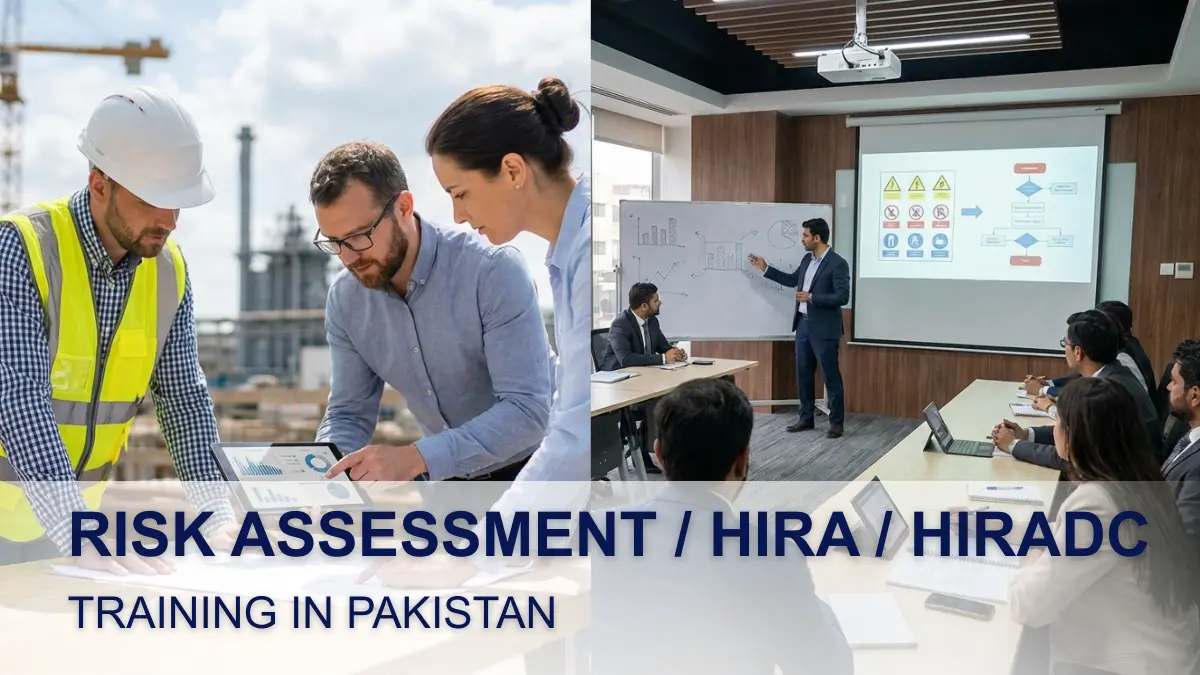
According to Project Risk Assessment / HIRA / HIRADC methodologies, PMO Project Risk Assessment Training is structured to help professionals predict, analyze, and mitigate uncertainties that may affect project success. In any project, uncertainties related to schedule slippage, cost escalation, resource constraints, technical issues, or stakeholder expectations can negatively impact results without a formal risk management process.
The Project Risk Assessment / HIRA / HIRADC Training course by Adroit Training provides project managers, engineers, planners, and professionals with practical tools to identify potential risks, quantify their impacts, and develop mitigation plans. Participants learn to create risk registers, conduct qualitative and quantitative risk analysis, rank risks, and formulate effective response strategies. Formal risk identification tools like HIRA (Hazard Identification and Risk Assessment) and HIRADC (Hazard Identification, Risk Assessment, and Determining Controls) are applied in a project management context.
Introduction to Project Risk Assessment
Project Risk Assessment / HIRA / HIRADC is a methodology to identify uncertainties affecting project goals and evaluate their likelihood and impact. It allows project teams to anticipate potential problems and implement solutions proactively. Risk assessment in PMP includes identifying risks, analyzing probability and impact, prioritizing, planning responses, and monitoring risks throughout the project lifecycle.
The Significance of Project Risk Assessment
Projects are dynamic, and uncertainties can affect outcomes. Project Risk Assessment / HIRA / HIRADC enables teams to predict obstacles and implement measures to protect project objectives. Key benefits include:
- Early detection of potential project threats
- Better forecasting and planning
- Reduction of schedule delays and cost overruns
- Improved decision-making during project execution
- Increased stakeholder confidence and trust
- Better resource allocation and scheduling
- Enhanced governance and project control
- Improved collaboration within project teams
- Higher likelihood of successful project delivery
- Alignment with international project management best practices
The Project Risk Assessment Process
- Plan Risk Management: Establish project risk structures and management approach
- Identify Risks: Recognize threats and opportunities affecting project performance
- Qualitative Risk Analysis: Determine likelihood and consequences of each risk
- Quantitative Risk Analysis: Assess financial or schedule impacts using analytical tools
- Formulate Risk Response Strategies: Plan mitigation, avoidance, transfer, or acceptance measures
- Monitor and Control Risks: Continuously monitor risks and update response plans
Advantages of Project Risk Assessment / HIRA / HIRADC Training
- Systematic risk identification capability
- Ability to analyze ambiguous project uncertainties
- Improved planning and forecasting
- Enhanced decision-making under uncertainty
- Better stakeholder coordination
- Reduced risk of project failures or delays
- Alignment with global project management standards
- Stronger project manager leadership skills
- Improved organizational project success and performance
Training Requirements
This training is designed for professionals involved in project planning, coordination, or execution. Eligibility includes:
- Basic knowledge of project environments
- Experience working in project teams
- Interest in project risk analysis and decision-making
No prior certification is required; suitable for both beginners and experienced professionals.
Common Errors in Project Risk Management
- Neglecting early risk recognition
- Risk treatment without prioritization
- Not updating risk registers
- Failure to assign monitoring responsibilities
- Lack of continuous risk monitoring
Comparing HIRA and HIRADC
| Method | Practice in Project Management |
|---|---|
| HIRA | Determines possible project risks and their effects |
| HIRADC | Identifies risks and defines response strategies |
Training Costs and Delivery Options
Costs vary depending on delivery method and organizational needs:
- Classroom-based sessions
- Online instructor-led programs
- Corporate customized workshops
- PMP 2 and PMI-RMP exam preparation courses
This training helps minimize project failure risks and improves decision-making processes.
Professional Advice
- Identify risks from project initiation
- Maintain an effective risk register
- Prioritize risks by likelihood and impact
- Assign ownership for risk monitoring
- Regularly monitor and revise mitigation strategies
- Apply lessons learned from past projects
- Encourage open communication about risks
Course Content
- Module 1.1: Project risk management introduction – risk concepts, PMBOK processes, types of project risks
- Module 2: Risk Identification Techniques – brainstorming, professional input, Risk Breakdown Structures, risk registers, threat and opportunity identification
- Module 3: Qualitative and Quantitative Risk Analysis – probability & impact analysis, scoring models, prioritization
- Module 4: Advanced Quantitative Analysis – Monte Carlo simulation, decision tree analysis, sensitivity & tornado diagrams
- Module 5: Risk Recovery Planning – avoidance, mitigation, transfer, and acceptance strategies
- Module 6: Risk Monitoring & Control – observe, detect new risks, update registers, measure mitigation effectiveness
Training Delivery Options
- Classroom workshops
- Instructor-led online sessions
- Corporate customized programs
- Project risk management simulations
Frequently Asked Questions
- What is Project Risk Assessment? A process to establish, analyze, and manage uncertainties that can affect project scope, cost, schedule, or quality.
- Who should attend? Project managers, engineers, planners, analysts, and professionals involved in project planning or execution.
- Is PMP certification inclusive of risk management? Yes, risk management is a knowledge area in PMP.
- Tools used? Risk registers, risk matrices, Monte Carlo simulation, decision tree analysis.
- Certification? Participants receive a Project Risk Assessment / HIRA / HIRADC Training Certificate upon completion.
Summary
- Structured project risk management frameworks
- Early identification of project threats and opportunities
- Qualitative and quantitative risk assessment
- Effective mitigation and response strategies
- Risk monitoring and control throughout project implementation
- Improved leadership and decision-making skills
- Enhanced project and organizational performance
Call to Action
Enhance your project management expertise with Project Risk Assessment / HIRA / HIRADC Training by Adroit Training. Call us today for future training schedules, 📲 WhatsApp us to ask questions, or visit our website to explore professional training programs. Enroll now to develop advanced project risk management skills and deliver successful projects.