Adroit training 2026

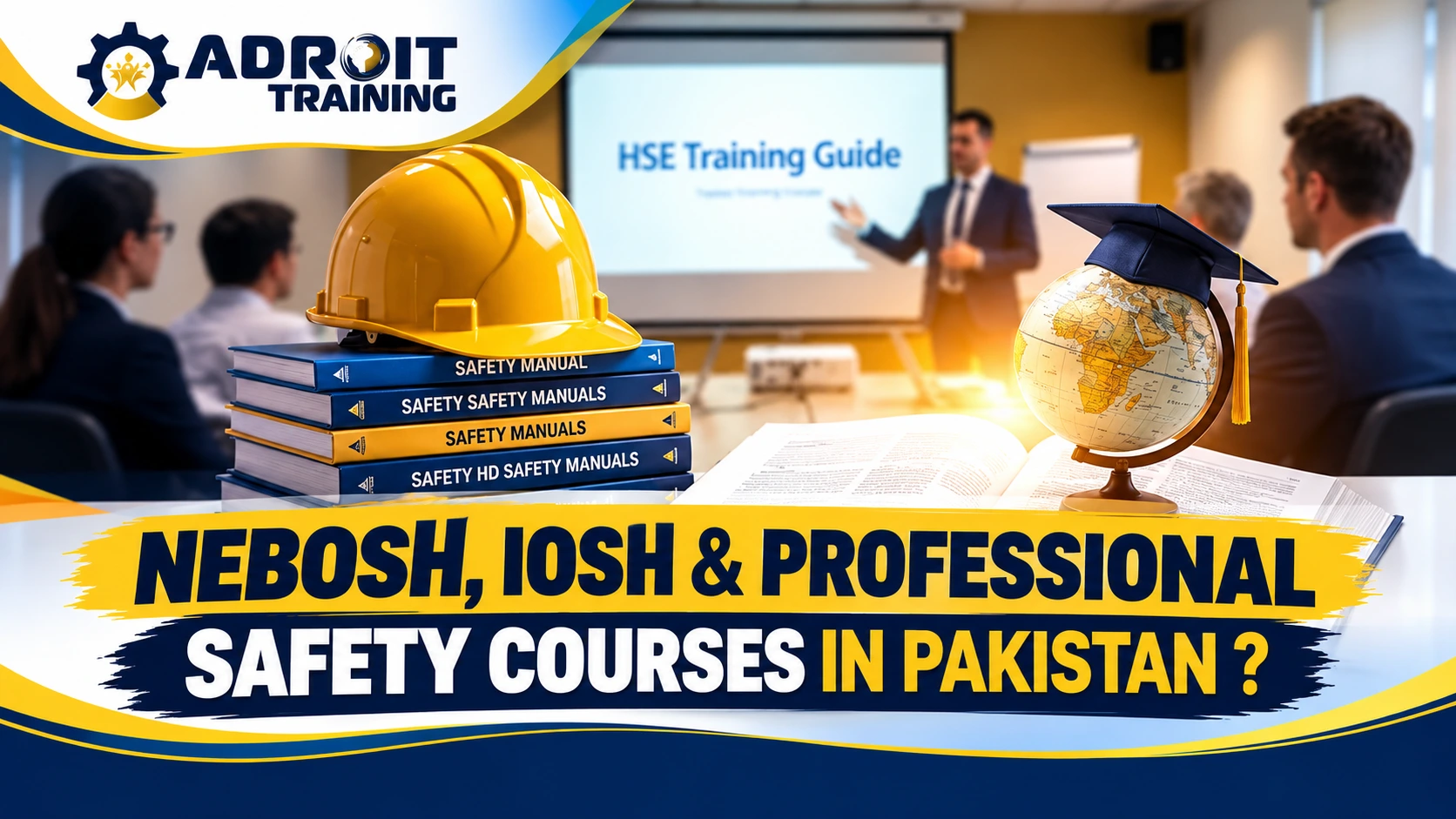
Safety Training Courses in Pakistan: Build Your Career with International Certifications
Explore professional safety training, develop practical workplace knowledge, and discover learning pathways in health, safety, and environmental management with Adroit Training.
Workplace safety is a crucial requirement for organizations across today's industrial environment. Health, safety, and environmental (HSE) standards are important in construction, oil and gas, manufacturing, healthcare, logistics, and corporate sectors. Effective safety practices help protect workers, reduce workplace risks, support compliance, and improve operational effectiveness.
Adroit Training, a professional division of Adroit Group of Companies, provides structured, industry-focused, and career-oriented training solutions. Our approach emphasizes practical learning, real-world application, and step-by-step guidance to help learners develop relevant knowledge and professional competence.
Professional Training Programs at Adroit Training
Our training portfolio includes workplace safety courses and wider professional development programs for learners, working professionals, supervisors, and managers.
Health and Safety Training
- NEBOSH training
- IOSH training
- HSE General Safety
- Construction Safety
- Fire Safety and Emergency Response
- First Aid and CPR
Professional and Technical Training
- ISO Lead Auditor: ISO 9001, ISO 14001 and ISO 45001
- Lean Six Sigma
- Project Management Professional (PMP)
- Risk Management Professional (RMP)
- Primavera project planning and scheduling
- AI and digital skills
Soft Skills Development
- Leadership and communication
- Professional development
- Workplace behavior
- Team and employee development
Corporate Training
Organization-focused training can be tailored to team responsibilities, workplace requirements, and professional development priorities.
What Is Adroit Training?
Adroit Training is the professional training division of Adroit Group of Companies. It focuses on workplace training, safety awareness, professional skills, and international safety certification pathways.
In today's competitive job market, certification is only one part of professional development. Learners also need practical knowledge, confidence, and the ability to apply safety principles in real workplace situations.
Our training approach emphasizes:
- Industry-related learning and examples
- Clear explanations of complex concepts
- Case studies and interactive learning
- Hazard identification and risk assessment
- Emergency response and safety management awareness
- Career-focused professional development
Learn more about Adroit Education's blog resources for relevant education and professional development topics.
Safety training is about more than passing an assessment. It is about understanding workplace hazards, helping prevent incidents, and developing responsible professionals who contribute to safer working environments.
Why Is Safety Training Important?
Organizations need people who understand workplace hazards, risk controls, safe working practices, and emergency procedures. Safety training can help learners build relevant knowledge and prepare for responsibilities in different industries.
Professional Development
Build a foundation for continued learning in occupational health, safety, and environmental management.
Industry Flexibility
Explore safety-related roles across construction, manufacturing, oil and gas, healthcare, and corporate environments.
Workplace Awareness
Learn to recognize hazards, understand risk controls, and contribute to safer working practices.
Professional Credibility
Relevant training and recognized qualifications may strengthen your professional profile. Career outcomes depend on experience, qualifications, and employer requirements.
Our Professional Safety Training Courses
Adroit Training offers safety-focused learning options for beginners and professionals seeking to develop workplace knowledge.
1. NEBOSH Training – International Safety Qualification
NEBOSH stands for the National Examination Board in Occupational Safety and Health. NEBOSH qualifications are widely known in the occupational health and safety field and may support learners who want to develop a career in HSE.
NEBOSH training can help learners understand how to identify hazards, assess risks, support safety systems, and contribute to workplace safety management in construction, oil and gas, manufacturing, and corporate operations.
What You May Learn
- Hazard identification and risk assessment
- Workplace safety principles
- Incident reporting and investigation
- Health and safety management systems
- International safety laws and practices
Potential Career Relevance
- HSE and safety-related roles
- Construction and manufacturing environments
- Oil and gas operations
- Further professional development in HSE
NEBOSH Examination Preparation
Examination arrangements depend on the specific NEBOSH qualification and its current assessment requirements. Preparation may include understanding the assessment format, practicing scenario-based questions, completing required assessments, and reviewing feedback.
Confirm the applicable assessment method, examination dates, submission requirements, and pass criteria for your particular NEBOSH qualification before enrolling.
2. IOSH Working Safely and Managing Safely
IOSH offers workplace safety training for different audiences. IOSH Working Safely introduces employees to essential safety awareness, while IOSH Managing Safely is designed for people with management or supervisory responsibilities.
Course selection should reflect your current role, experience, and learning objectives.
IOSH Working Safely
A foundation-level approach to workplace safety awareness for employees across different industries.
- Understanding workplace hazards
- Safe working practices
- Individual safety responsibilities
- Risk and environmental awareness
IOSH Managing Safely
A management-oriented course for understanding workplace safety responsibilities and risk management.
- Recognizing hazards and risks
- Understanding safety responsibilities
- Supporting safer work practices
- Building safety management awareness
IOSH Assessment and Career Value
Assessment requirements depend on the applicable course and provider arrangements. Confirm the current assessment method, delivery format, results timeline, and certification requirements when booking.
Working Safely may be a useful starting point for employees who want to understand basic safety practices. Learners may consider additional qualifications appropriate to their career goals.
3. HSE General Safety Training
HSE General Safety Training introduces health, safety, and environmental practices that can be relevant across a range of workplaces.
Key Learning Areas
- Workplace hazard identification
- Risk management and contingency planning
- Safety policies and procedures
- Environmental safety practices
- Personal protective equipment (PPE)
The course aims to strengthen safety awareness, support accident prevention, and help learners understand their responsibilities at work.
4. Construction Site Safety Training
Construction environments can involve significant hazards, making safety awareness important for workers, supervisors, and other site personnel.
Training Topics
- Identifying construction-site hazards
- Appropriate PPE, including helmets, gloves, and harnesses
- Fall protection and scaffolding safety
- Machinery and equipment safety
- Accident prevention methods
Who May Benefit?
- Construction workers
- Site supervisors
- Engineers
- Safety officers
5. Fire Safety and Fire Warden Training
Fire safety training helps participants understand fire prevention and prepare for workplace fire emergencies. Fire warden responsibilities depend on organizational procedures and applicable requirements.
Key Learning Areas
- Fire prevention strategies
- Types of fire and fire extinguishers
- Emergency evacuation procedures
- Fire risk assessment awareness
Training can help improve emergency awareness, strengthen preparedness, and support workplace fire safety procedures.
6. First Aid and CPR Training
First Aid and CPR training introduces essential knowledge for responding to medical emergencies in workplaces and everyday settings.
What You May Learn
- Basic first aid techniques
- Cardiopulmonary resuscitation (CPR)
- Managing bleeding and injuries
- Emergency response procedures
- Initial assistance before further medical care
Why It Matters
- Supports preparedness for medical emergencies
- Builds confidence in emergency response
- Promotes awareness in workplaces and communities
7. Emergency Response Training
Emergency response training helps individuals and organizations prepare for unexpected events such as accidents, fires, and other emergencies.
Key Learning Areas
- Emergency planning and procedures
- Crisis management principles
- Evacuation planning
- Communication during emergencies
- Risk reduction techniques
Effective preparation can support better coordination, more organized responses, and improved organizational resilience.
Why Choose Adroit Training?
Adroit Training focuses on structured learning and professional development to help learners understand course concepts and relate them to workplace responsibilities.
Practical Learning
Learn through clear explanations, examples, and a focus on real-world workplace situations.
Industry-Relevant Content
Explore topics connected with safety, risk management, and professional responsibilities.
Career-Focused Guidance
Identify learning pathways that align with your experience and professional development goals.
Flexible Learning Options
Ask about available training schedules, course formats, and program-specific arrangements.
Career Paths After Safety Training
Depending on your qualifications, experience, practical competence, and employer requirements, safety training may be relevant to roles such as:
- Safety Officer
- HSE Supervisor
- Safety Manager
- Site Safety Inspector
- Fire Safety Officer
Safety-related responsibilities can exist across several industries:
Industrial Environments
- Construction
- Oil and gas
- Manufacturing
Other Workplaces
- Healthcare
- Corporate organizations
- Logistics and operational settings
A training certificate does not guarantee employment, a particular salary, or an overseas job. Employers may require specific qualifications, experience, practical skills, and work authorization.
Who Should Consider These Safety Courses?
- Students and fresh graduates exploring safety careers
- Working professionals developing their knowledge
- Technicians and engineers
- Construction workers and site personnel
- Supervisors and managers
- Individuals interested in workplace health and safety
Our Step-by-Step Training Approach
A structured learning journey can help you identify an appropriate course and prepare for your next professional development step.
- Consultation: Discuss your background, interests, and training goals.
- Course Selection: Choose a course that suits your experience and intended responsibilities.
- Training Sessions: Study the course material through the available learning format.
- Assessment Preparation: Review the applicable evaluation and certification requirements.
- Career Development: Use your learning to plan suitable next steps in your professional journey.
Common Safety Career Planning Mistakes
- Selecting a course without checking its relevance to your goals
- Overlooking practical learning and workplace application
- Failing to understand applicable safety standards
- Starting training without a clear career development plan
- Neglecting ongoing learning and professional skill development
Frequently Asked Questions About Safety Training
1. Is NEBOSH recognized internationally?
NEBOSH qualifications are widely known in the occupational health and safety field. Recognition and suitability depend on the specific qualification, employer, and role requirements.
2. Which safety course is suitable for beginners?
IOSH Working Safely or HSE General Safety may be useful starting points for basic safety awareness. The best choice depends on your experience and learning objectives.
3. Can safety training help with career development?
Relevant training can help build knowledge and strengthen your professional profile. Job opportunities depend on qualifications, experience, employer criteria, and local requirements.
4. Does safety training include practical learning?
Adroit Training describes its approach as practical and industry-focused. Contact the training team to confirm the practical activities and delivery method for your selected course.
5. Who can enroll in safety courses?
Students, fresh graduates, employees, technicians, engineers, supervisors, managers, and others interested in safety may explore suitable courses. Entry requirements vary by program.
6. Which safety course should I choose for an international career?
Identify the type of role and industry you are targeting. Then compare the relevant qualification, employer requirements, course content, and assessment arrangements before enrolling.
Build Your Future with Adroit Training
From NEBOSH and IOSH training to fire safety, first aid, construction safety, and emergency response, Adroit Training offers learning options for people interested in developing workplace safety knowledge and professional skills.
Choose a course based on your background, career objectives, and the responsibilities you want to pursue.
Take the Next Step in Your Professional Development
Contact Adroit Training to discuss available courses, training schedules, eligibility, and certification requirements.
Visit Adroit Group