

Chemical & Hazardous Materials (HAZMAT) Safety Training – Adroit Training

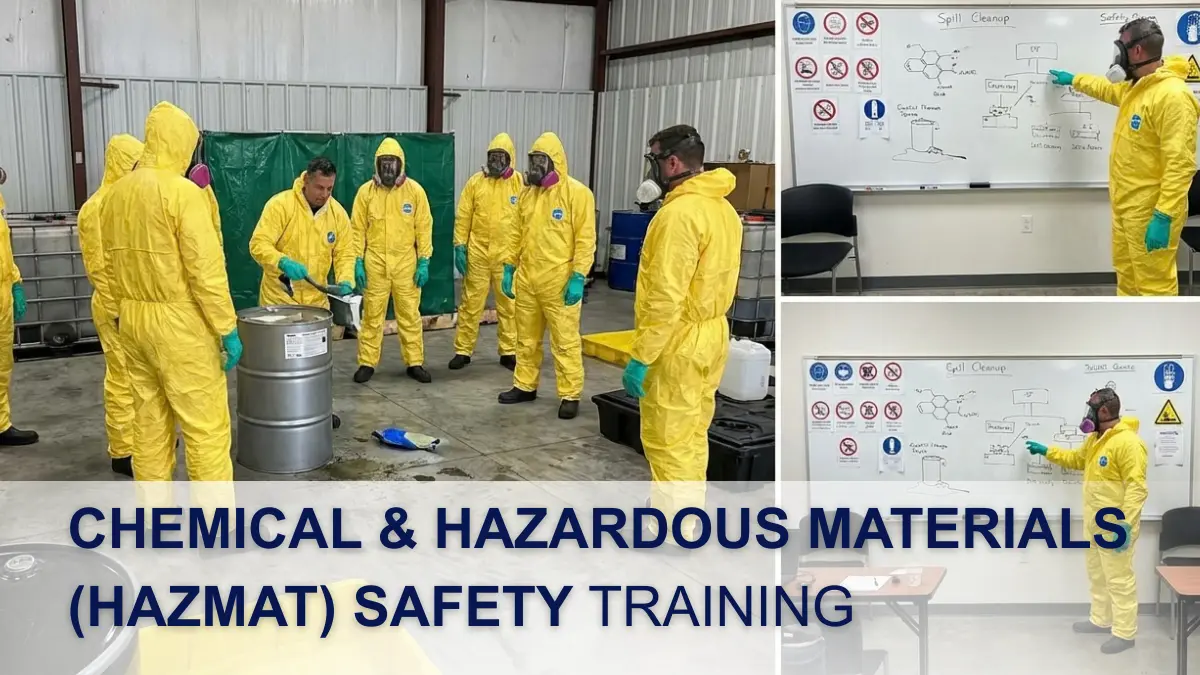
CHEMICAL & HAZARDOUS MATERIALS (HAZMAT) SAFETY TRAINING – ADROIT TRAINING
The handling of chemicals and hazardous substances is a fundamental part of operations in many industries, including manufacturing, oil and gas, pharmaceuticals, laboratories, construction, and logistics. However, improper handling, storage, or disposal of hazardous materials can result in serious accidents, environmental damage, and health risks. This is where Chemical & Hazardous Materials (HAZMAT) Safety Training delivered by Adroit Training becomes essential for ensuring workplace safety and operational continuity.
This comprehensive training programme is designed to equip workers, supervisors, and HSE professionals with the knowledge and practical skills required to safely handle, store, transport, and respond to chemical hazards. The programme focuses on real-world risks, regulatory compliance, and effective emergency response strategies.
Across Industries in Pakistan, organisations are increasingly required to comply with international safety standards while maintaining efficiency. Chemical & Hazardous Materials (HAZMAT) Safety Training supports these requirements by strengthening workplace safety practices and building a culture of hazard awareness.
Participants benefit from a combination of theoretical learning and practical application, including case studies, simulations, and interactive exercises. This ensures that knowledge gained during Chemical & Hazardous Materials (HAZMAT) Safety Training can be applied directly in real workplace situations.
WHY CHEMICAL & HAZARDOUS MATERIALS (HAZMAT) SAFETY TRAINING IS IMPORTANT
Chemical hazards are often invisible and can escalate quickly if not properly managed. Exposure to toxic substances, flammable materials, and reactive chemicals can lead to serious injuries, long-term health issues, and costly operational disruptions. Implementing Chemical & Hazardous Materials (HAZMAT) Safety Training enables organisations to manage these risks effectively.
Through this training, organisations can:
- Prevent chemical spills, leaks, and exposure incidents
- Improve hazard identification and risk management
- Strengthen compliance with HSE, OSHA, and ISO 45001 standards
- Enhance emergency preparedness and incident response
- Reduce downtime, financial losses, and legal liabilities
- Promote a proactive safety culture
By applying the principles of Chemical & Hazardous Materials (HAZMAT) Safety Training, employees can recognise hazards before they become incidents and take appropriate preventive measures. The training also prepares teams to respond quickly and effectively in emergencies, reducing risks to people, property, and the environment.
WHY CHOOSE CHEMICAL & HAZARDOUS MATERIALS (HAZMAT) SAFETY TRAINING WITH ADROIT TRAINING
Selecting a professional training provider is essential for achieving meaningful safety outcomes. Adroit Training, part of the Adroit Group of Companies, delivers industry-relevant programmes tailored to the needs of organisations across Pakistan.
The Chemical & Hazardous Materials (HAZMAT) Safety Training programme stands out due to its practical approach, experienced trainers, and focus on real-world application.
1. Practical and Scenario-Based Learning
Participants engage in real-life scenarios, allowing them to understand how chemical hazards occur and how to manage them effectively.
2. Focus on Hazard Prevention
The training emphasises proactive hazard identification and control measures to prevent incidents before they occur.
3. Compliance with International Standards
The programme aligns with HSE, OSHA, ISO 45001, and environmental standards, ensuring organisations meet regulatory requirements.
4. Hands-On Training Experience
Practical demonstrations, simulations, and exercises enhance learning and build confidence in handling hazardous materials.
5. Industry-Relevant Content
The training is tailored to address risks specific to different industries, making it highly applicable in real work environments.
WHO SHOULD ATTEND CHEMICAL & HAZARDOUS MATERIALS (HAZMAT) SAFETY TRAINING
This programme is suitable for professionals involved in handling, managing, or supervising hazardous materials across various industries.
Ideal participants include:
- Chemical plant workers and operators
- Laboratory technicians and researchers
- Maintenance and engineering staff
- Safety officers and HSE professionals
- Contractors handling hazardous substances
- Warehouse and logistics teams
- Facility and plant managers
No prior chemical safety knowledge is required, making Chemical & Hazardous Materials (HAZMAT) Safety Training accessible to individuals at all levels.
INTRODUCTION TO CHEMICAL AND HAZMAT SAFETY
Chemical safety involves understanding the properties of substances and the risks they present in the workplace. Hazardous materials may exist in liquid, solid, or gaseous forms, and each type carries specific dangers. Chemical & Hazardous Materials (HAZMAT) Safety Training provides participants with a clear understanding of these risks and how to manage them effectively.
Key Concepts Covered:
- Definition of hazardous materials
- Common workplace chemical hazards
- Legal duties and responsibilities
- Lessons learned from past incidents
These fundamentals form the basis of safe chemical handling and are essential for preventing workplace incidents.
TYPES OF HAZARDOUS MATERIALS
Hazardous materials are classified based on their properties and the risks they pose. Understanding these classifications is a critical component of safe workplace practices.
Common Types Include:
- Flammable substances that can ignite easily
- Toxic materials that can cause harm through exposure
- Corrosive chemicals that damage skin and surfaces
- Reactive substances that may explode or release energy
- Compressed gases that pose pressure-related risks
- Biological hazards and radioactive materials
Through Chemical & Hazardous Materials (HAZMAT) Safety Training, participants learn how to identify these materials and apply appropriate control measures.
HAZARD IDENTIFICATION AND RISK ASSESSMENT
Identifying hazards is the first and most important step in preventing accidents. This involves recognising potential risks and implementing measures to control them effectively.
Key Elements:
- Understanding Safety Data Sheets (SDS)
- Recognising chemical symbols and hazard labels
- Conducting workplace risk assessments
- Mapping hazards and implementing control strategies
Chemical & Hazardous Materials (HAZMAT) Safety Training equips participants with the skills required to assess risks accurately and take preventive action.
SAFE HANDLING AND STORAGE PRACTICES
Proper handling and storage of hazardous materials are essential to maintaining a safe work environment. Incorrect practices can lead to spills, leaks, and exposure incidents.
Key Practices Include:
- Correct labelling of chemical containers
- Segregation of incompatible substances
- Maintaining proper ventilation systems
- Using containment and spill prevention measures
- Following safe transfer procedures
These practices significantly reduce risks and are reinforced through Chemical & Hazardous Materials (HAZMAT) Safety Training.
PERSONAL PROTECTIVE EQUIPMENT (PPE)
Personal Protective Equipment (PPE) plays a vital role in protecting workers from exposure to hazardous materials. Selecting the right PPE is essential for ensuring safety.
Common PPE Includes:
- Chemical-resistant gloves
- Safety goggles and face shields
- Respiratory protection equipment
- Protective clothing and footwear
Participants learn how to select, use, inspect, and maintain PPE effectively as part of Chemical & Hazardous Materials (HAZMAT) Safety Training.
TRANSPORTATION AND DISPOSAL OF HAZARDOUS MATERIALS
Safe transportation and disposal of hazardous materials are critical to preventing environmental damage and workplace incidents.
Key Areas Covered:
- Proper packaging and labelling requirements
- Safe loading and unloading procedures
- Waste management and disposal practices
- Compliance with environmental regulations
Effective management ensures that hazardous materials are handled responsibly throughout their lifecycle, supporting the objectives of Chemical & Hazardous Materials (HAZMAT) Safety Training.
EMERGENCY RESPONSE AND INCIDENT MANAGEMENT
Even with preventive measures in place, emergencies involving hazardous materials can still occur. Being prepared to respond quickly and effectively is essential to minimise damage and protect lives. Chemical & Hazardous Materials (HAZMAT) Safety Training equips participants with the skills needed to handle such situations with confidence.
Key Elements:
- Spill response procedures and containment techniques
- First aid measures for chemical exposure
- Fire and explosion awareness
- Emergency communication and coordination
Through Chemical & Hazardous Materials (HAZMAT) Safety Training, participants learn how to act promptly during incidents, reducing risks to people, property, and the environment.
COMMON CHEMICAL SAFETY VIOLATIONS
Understanding common mistakes is important for preventing accidents and maintaining a safe workplace. Many incidents occur due to avoidable errors and lack of awareness.
Examples Include:
- Improper labelling of hazardous substances
- Unsafe storage or disposal practices
- Failure to use appropriate PPE
- Ignoring Safety Data Sheets (SDS)
Addressing these issues is a key focus of Chemical & Hazardous Materials (HAZMAT) Safety Training, helping organisations maintain high safety standards.
PRACTICAL AWARENESS AND CASE STUDIES
Hands-on learning is a critical component of effective Safety training. Participants engage in practical exercises designed to reinforce knowledge and improve decision-making in real situations.
- Analysis of real-world chemical incidents
- Safe versus unsafe handling comparisons
- Toolbox talk simulations
- Interactive group discussions
These activities ensure that Chemical & Hazardous Materials (HAZMAT) Safety Training delivers practical value and enhances workplace readiness.
TRAINING DELIVERY OPTIONS – ADROIT TRAINING
To meet the diverse needs of organisations, Adroit Training offers flexible delivery options for this programme.
- On-site chemical safety training
- Classroom-based sessions
- Corporate and customised programmes
- Industry-specific awareness training
- Practical demonstrations and interactive learning
These delivery methods ensure that Chemical & Hazardous Materials (HAZMAT) Safety Training is accessible, relevant, and effective across different industries.
BENEFITS OF CHEMICAL & HAZARDOUS MATERIALS (HAZMAT) SAFETY TRAINING
1. Improved Workplace Safety
Reduces the likelihood of chemical accidents, injuries, and environmental incidents.
2. Regulatory Compliance
Ensures adherence to HSE, OSHA, ISO standards, and environmental regulations.
3. Enhanced Emergency Preparedness
Prepares teams to respond effectively to chemical incidents and emergencies.
4. Increased Employee Confidence
Builds competence in handling hazardous materials safely and responsibly.
5. Strong Safety Culture
Encourages awareness, accountability, and continuous improvement in workplace safety.
Overall, Chemical & Hazardous Materials (HAZMAT) Safety Training strengthens both individual capability and organisational safety performance.
CERTIFICATION
Upon successful completion, participants receive a Chemical & Hazardous Materials (HAZMAT) Safety Training Certificate issued by Adroit Training. This certification is recognised by organisations across Pakistan and enhances professional credibility.
ENROL TODAY – CHEMICAL & HAZARDOUS MATERIALS (HAZMAT) SAFETY TRAINING IN PAKISTAN
Protect lives, prevent chemical accidents, and strengthen workplace compliance with professional training designed to meet industry requirements.
Delivered by Adroit Training, part of Adroit Group of Companies, Chemical & Hazardous Materials (HAZMAT) Safety Training empowers individuals and organisations to manage chemical risks effectively and safely.
Take the next step toward safer operations. Equip your workforce with the knowledge and skills needed to handle hazardous materials with confidence and responsibility.